AIR CDRE (RETD) ISHFAQ ILAHI CHOUDHURY
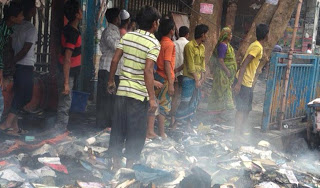

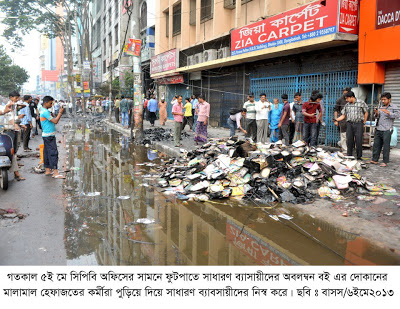
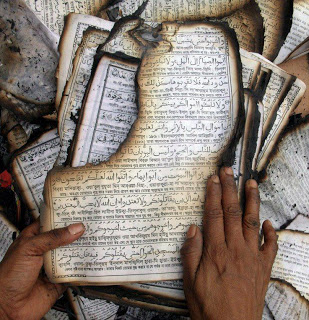
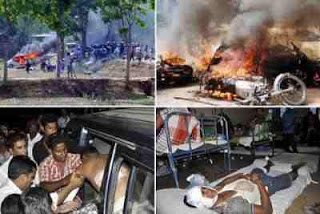
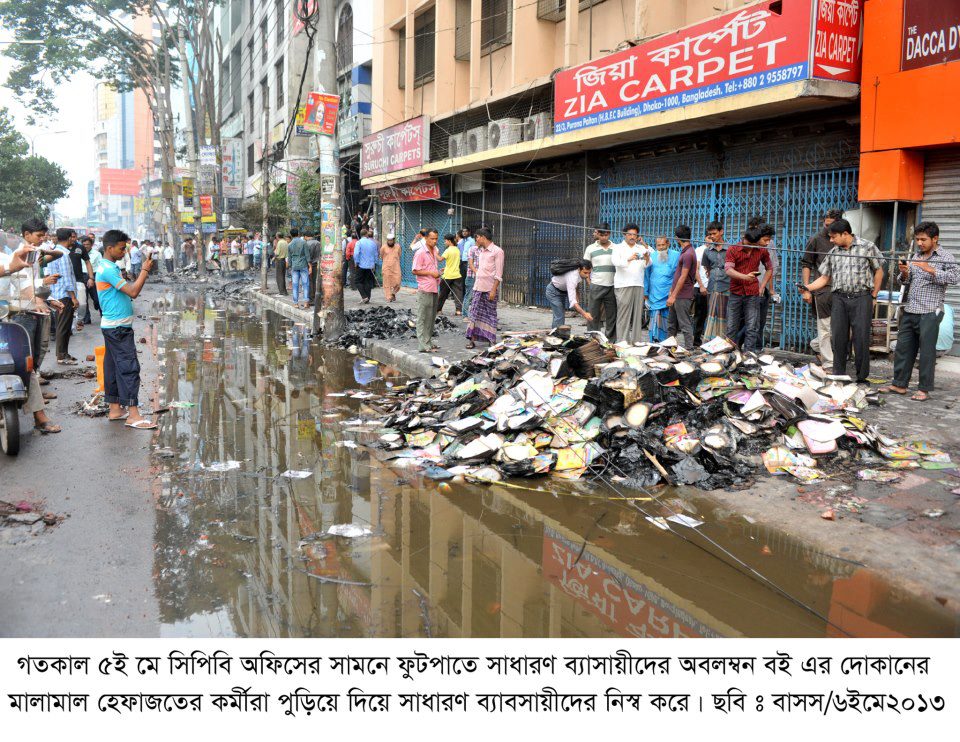
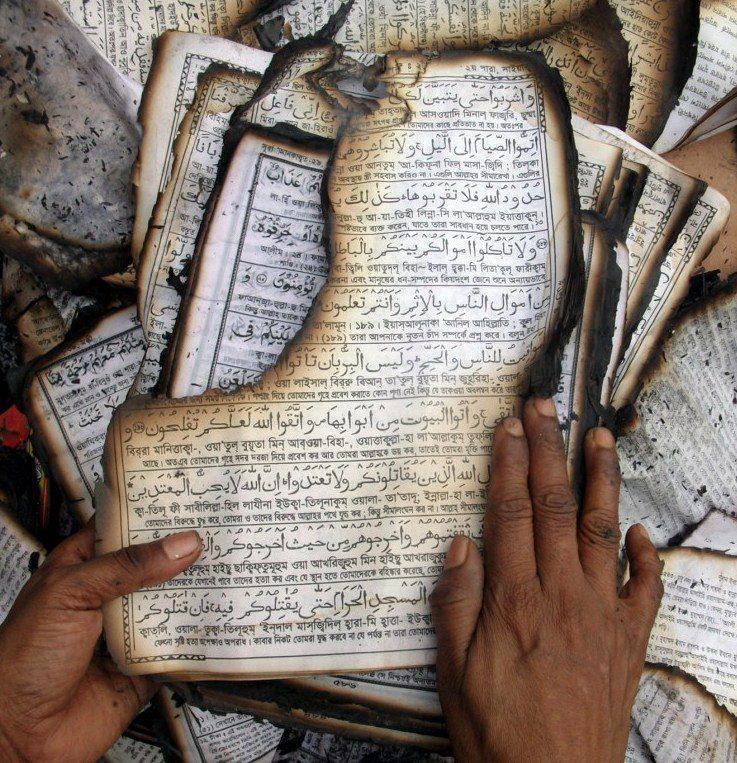
As we say goodbye to the year 2012, we might take time out to reflect on our achievements and failures in the year gone by, examine our prospects for the future and the challenges that lie ahead. Religious extremism leading to terrorist activities is one such area that needs to be reviewed. While many South Asian countries are deeply embroiled in the fight against terrorism, Bangladesh had generally been free from terrorist attacks since 2005. As we tended to relax, two incidents in 2012 brought our focus back to the terrorism issue. The first was the burning and looting of the houses and temples of the Buddhist communities in Cox’s Bazar area on 29-30 September. The second was the arrest on 17 October of a young Bangladeshi man caught while planning to bomb the Federal Reserve Building in New York, USA. As the year was coming to a close, the violence unleashed across the country by the Jamaat-e-Islami (JI), a right-wing Islamist party, sent us a clear signal of the growing strength of Islamist politics. we say goodbye to the year 2012, we might take time out to reflect on our achievements and failures in the year gone by, examine our prospects for the future and the challenges that lie ahead. Religious extremism leading to terrorist activities is one such area that needs to be reviewed. While many South Asian countries are deeply embroiled in the fight against terrorism, Bangladesh had generally been free from terrorist attacks since 2005. As we tended to relax, two incidents in 2012 brought our focus back to the terrorism issue. The first was the burning and looting of the houses and temples of the Buddhist communities in Cox’s Bazar area on 29-30 September. The second was the arrest on 17 October of a young Bangladeshi man caught while planning to bomb the Federal Reserve Building in New York, USA. As the year was coming to a close, the violence unleashed across the country by the Jamaat-e-Islami (JI), a right-wing Islamist party, sent us a clear signal of the growing strength of Islamist politics. These are happening at a time when an avowed secular party, the Awami League (AL), is in power. AL won the 2008 election with a commitment to amend the constitution to restore its secular character. It also promised stern action against all forms of religious extremism and terrorism. Four years down the line, much of those promises remain unfulfilled. Constitutional reform was half-done; Islam remained a state religion. Religious parties are more organised today than ever before. Their student fronts are active in most educational institutions. While Islamists are active on political fronts, more radical amongst them are organising themselves for terrorist activities as and when opportunities appear.
Rise of Islamic extremism in Bangladesh
On 16 December 1971, we hoped that Bangladesh would emerge as a modern democratic state. The spirit of the nation was epitomised in the Constitution (1972) that adopted secularism as a state principle and prohibited the political use of religion. The Constitution barred the state from declaring any religion as state religion. However, it all changed after the killing of Bangabandhu Sheikh Mujibur Rahman and many top-ranking political leaders in 1975. Those who seized power at the time found the Islamists as their political ally and started islamising the society and the state. Islamist political parties, such as JI, started building their party structures. The power elites established thousands of madrassas that produced religiously indoctrinated youths who would be the front-line activists of the Islamist parties. Poor, jobless students from the madrassas became easy target of the recruiters of militant Islamist organisations. By late 1990s we had militant organisations such as Jamiatul Mujahedin Bangladesh (JMB) and Harkatul Jihad Al-Islami (HUJI) that took roots in Bangladesh.
Starting from 1999 to 2005, the militants bombed temples, churches, political rallies, cultural functions, cinema halls etc. The government and the opposition kept on blaming each other for those attacks. Even when grenades attack was made on the AL rally in Dhaka on 22 August 2004 killing 22 people and injuring the AL Chief Sheikh Hasina, the government blamed it on the opposition. The series bombing on 17 August 2005 finally compelled the government to come out of the denial mode and stand up to the terrorist threat. In 2006-07, we saw a series of arrests, prosecution and handing down of sentences, including death sentences, on some of the terror leaders. Since then there has been no major terror attack in Bangladesh, but that the terrorists are active is evident from the frequent arrests of activists and seizure of large cache of arms and explosives from their hideouts.
Bulk of the Islamic militants arrested so far had come from poor rural communities. Many were from the Quomi Madrassa background. However, recent years saw a new breed of extremists called the Hizb-ut-Tahrir (HuT). HuT members are drawn from children of urban, upper income parentage, educated in the mainstream or English medium schools and colleges. HuT is targeting the cream of our youth, the nation’s future, and therefore, poses a clear danger. It is feared that HuT has penetrated among schools and universities, professionals – engineers, doctors, government officials and even among the security apparatus. Although the party was banned in 2009, its clandestine activities continue in the country. On the political front, JI continued to grow in strength in Bangladesh. The party is small in size, but highly disciplined, well-organised and has a well-defined hierarchy. Jamaat’s aim is to establish a pure Islamic state based on Sharia. The party had opposed the Liberation War of Bangladesh in 1971 and actively collaborated in the genocide. Some of the top leaderships are now facing war-crime trial. The party, therefore, is on a back foot now, but given the fact that a new election is around the corner, its rank and file might align with the major opposition party to make a bid for power. JI’s student wing, Islami Chattra Shibir (Islamic Students Front), is now a potent student organisation, from schools to universities. The other Islamist party of importance is Islami Oikyo Jote (Islamic Unity Front), a collection of small Islamic parties. Like JI, IOJ also wants to establish an Islamic state in Bangladesh, but there are differences in outlook. IOJ members are exclusively from Quomi madrassa background and more traditional. IOJ has been in the forefront, along with JI, in the movement to declare Ahmedia community as non-Muslims. Present government’s attempt to register Quomi Madrassas and reform their curriculum was thwarted by IOJ’s agitation. None of the Islamist political parties gave open support to the militant activities, however, many of the JMB and HUJI activists had previously been members of Islamist political parties. The Islamist parties have multifarious social, economic and financial investments. Some of the largest banks, insurance, hospitals, diagnostic centres, schools, universities, coaching centres, and travel agencies are operated undercover by the Islamist parties. The Islamist parties have been gaining in strength in Bangladesh at the expense of the two major political parties – BNP and AL. Both parties at one time or other have been courting these parties in order to gain short term advantage over the other.
Countering the extremists
Bangladesh government has taken a number steps to check extremism and militancy. Notable among those are: Anti-Terrorism Act 2009 and Money Laundering Prevention Act 2009 as amended in 2011. The two acts provide for deterrent punishment to offenders in case they engage in acts of terror or launder money to support terrorism. Based on a series of dialogues, workshops and seminars, participated by academics, researchers, politicians, parliamentarians, civil and military officials, a national strategy to combat terrorism in the country has been proposed.Bangladesh has banned a total of six terrorist organizations, including JMB, HUJI and HuT. A number of Islamic NGOs have been banned who had terror links, including Revival of Islamic Heritage Society (Kuwait), Rabita Al Alam Al Islami (Saudi Arabia), and International Islamic relief Organization (Saudi Arabia), Muslim Aid (UK). More than 1,300 militants were arrested; most of them belonging to JMB, HUJI-B or HuT. 29 terrorist kingpins have been sentenced to death and many more sentenced to long imprisonment or are awaiting trial.While our police action has been commendable, we did not do enough on the social front. We need to address urgently the problem of poverty, ignorance, and backwardness. Democratisation of the society is an insurance against extremist ideology. We need to improve governance and provide access to justice for the poor and downtrodden. We need to impart modern education to our youth that prepare them to face the challenges of a fast changing world. A thorough overhaul of madrassa education in our country is long overdue. We need an education system that produce people with high ethical and technical standards, a system that encourages freethinking rather than rote learning. Emergence of HuT points out a lack of pride and a sense of disillusionment among the children of affluent class. This is because English medium schools, where most of the rich parents send their children, follow a curriculum that has no relevance to our culture, history or traditions. Therefore, English medium school syllabus too needs a thorough review.Government must legislate not to allow use of religion to gain political mileage. We need to check creeping ‘Sudiaization’ of Islam. Along with the money from the ME donors, comes the ideological package of Wahhabi Islam which is alien to South Asia. One of the prices we pay for the remittance from our labour force in the ME is the influx of Saudi brand of Islam. How do we de-radicalise these migrant workers is a big challenge for us. Meanwhile, hundreds of extremists who are arrested or under trial must be segregated from other prisoners. At present, these extremists are finding a captive audience 24 hours at their disposal, busy recruiting new ones from among the prisoners. We need to isolate the extremists and start a de-radicalisation program so that when they return to the society they become useful citizen.Our effort to counter religious extremism must be supplemented by regional and global effort. We need to have close cooperation and coordination between the governments of the region. Border monitoring, passport control, anti-money laundering measures, exchange of information on the movement of suspects, arrest and deportation of fugitives are some of the areas where regional countries could cooperate. Checking of arms smuggling across the porous border is another area where regional cooperation is the answer. In short, a total, comprehensive strategy has to be adopted for fighting religious extremism. If Bangladesh is to emerge as a modern, democratic state, the menace of extremism must be eliminated.
Published by Freedom Fighter Moktel Hossain Mukthi
http://shomoy71.blogspot.com/
http://august75tragedy.blogspot.com/
http://extremistinbangladesh.blogspot.com/
http://theunfinishedmemoirs.blogspot.com/
http://bdslumdogmillionaire.blogspot.com/
http://daughterofdemocracy.blogspot.com/
http://mujibnagar71.blogspot.com/
http://shomoyekattur.blogspot.com/
http://myhomemyglory.blogspot.com/
http://mukthiibangalee.blogspot.com/
http://godfathertareqzia.blogspot.com/
http://burningbengalination.blogspot.com/
http://joydigitalbangla.blogspot.com/
http://thetrueteller.blogspot.com/
http://bangabandhuporisadmv.blogspot.com/
http://notesofmukthi.blogspot.com/
http://lifeandliability.blogspot.com/
http://maldivesawamijuboleague.blogspot.com/
http://muktimadaripuri.blogspot.com/
http://moktelhossainmukthi.blogspot.com/
http://moktelhossainmukthi.weebly.com/
http://narrowpolitics.blogspot.com/
http://bdawamileague.wordpress.com/
http://creationofmukthi.blogspot.com/
http://misrulesofbnpjamat.wordpress.com/
http://en.netlog.com/Muktishena71/
http://masterminds75.webs.com/
http://sheikhhasina.blog.com/
http://skhasinawajed.blogspot.com/
http://deshratna.weebly.com/
http://sheikhhasina.webs.com/
http://bangladeshstudentleague.blog.com/
http://advskhatun.webnode.com/
http://daughterofthedemocracy.blogspot.com/
http://bangabandhuporisadmv.blogspot.com/
http://thegreatestbangalee.blogspot.com/
http://theburningnation.weebly.com/
http://jathirpitha.wordpress.com/
http://skmujiburrahman.blogspot.com/
http://bangabandhu.weebly.com/
http://swadhinbangla.webs.com/
http://amibangalee.webs.com/
http://bangabandhuporisad.webs.com/
http://bangabandhu.webs.com/
http://august75tragedy.blogspot.com/
http://thefatherofnation.blogspot.com/
http://mujibshena.blogspot.com/
http://charterofchange.blogspot.com/
http://bangladeshawamileague.blog.com/
http://bangladeshawamileague.webs.com/
http://worldawamileague.blogspot.com/
http://charterofchange.blogspot.com/
http://charterofchange2021.blogspot.com/
http://digitalbangladesh.blog.com/
http://thepatriotism.blog.com/
http://bdpolitics.blog.com/
http://mukthi.tumblr.com/archive
http://mukthi.tumblr.com/muktimusician
http://thegenerationnext.webs.com/
http://thefutureleaderjoy.wordpress.com/
http://thefutureleader.webnode.com/
http://jajaborpakhi.blog.com/
http://muktimusician.livejournal.com/
http://moktelhossainmukthi.blog.com/
http://mukthi.xanga.com/
http://muktimusician.blog.co.in/
http://www.ustream.tv/channel/moktel-hossain-mukthi
http://muktirpata.blogspot.com/
http://muthirpachali.blogspot.com/
http://mukthimadaripuri.blog.co.in/
http://amarmonmanena.webs.com/
http://mukthi.webnode.com/
http://muktirpata.weebly.com/
http://khasherhat.blogspot.com/
http://soundcloud.com/muktimusician
http://muktimusician.multiply.com/
http://muktimusician.xanga.com/
http://muktimusician.dinstudio.com/
http://muktishena71.typepad.com/
http://muktishena71.webnode.com/
http://muktimusician.typepad.com/
http://muktimusician.posterous.com/
http://amramujibshena.blog.com/
http://muktimusician.blog.com/
http://muktimusician.stumbleupon.com/
http://muktimadaripuri.blogspot.com/
http://muktimusician.blogspot.com/
http://mukthircollection.blogspot.com/
http://muktimusician.photobucket.com/
http://bentio.com/muktimusician
http://muktimusician.wordpress.com/
http://muktishena71.bloggy.se/
http://bd.linkedin.com/in/muktimusician
http://mukthirpachali.blog.com/
http://muktimusician.myblogsite.com/
http://friendfeed.com/muktimusician
http://muktimusicina.twitpic.com/
http://muktimusician.mediashare.com/
http://freedomfighters71.blogspot.com/
http://muktimusician.imgur.com/
http://muktimusician.picturepush.com/
http://community.webshots.com/user/muktimusician
http://hawabhaban.blog.com/
http://misrulesofbnpjamat.webnode.com/
http://misrulesofbnpjamat.blogspot.com/
http://warcrime1971.webs.com/
http://warcrime1971.blogspot.com/
http://warcrime1971.weebly.com/
http://khaledaziaandrazakars.wordpress.com/
http://warcriminalsinbangladesh.wordpress.com/
http://warcriminalsinbangladesh.blogspot.com/
http://warcriminalnizami.blogspot.com/
http://warcriminalsakachoudhury.blogspot.com/
http://godfathertareqzia.blogspot.com/
http://nospaceforwarcriminal.blogspot.com/
http://razakarnizami.blogspot.com/
http://barristertaposhfanclub.blogspot.com/
http://en.wikipedia.org/wiki/Muktimusician
http://blogtown.co.nz/muktimusician/
http://priyo.com/muktimusician
http://en.netlog.com/Muktishena71
www.thoughts.com/muktimusician
www.myspace.com/muktimusician
www.orkut.com/warcriminalsinbangladesh
www.warcriminalsinbangladesh.hi5.com
www.netlog.com/muktimusician
www.blogigo.co.uk/muktimusician
www.picasaweb.com/muktimusician
www.orkut.com/muktimusician
www.muktimusician.hi5.com
www.tagged.com/mukthimadaripuri
www.tagged.com/amibangali
www.tagged.com/muktimusician
www.tagged.com/deshratna
www.tagged.com/muktithegreat
www.tagged.com/amibangali
www.squidoo.com/muktimusician
www.youtube.com/muktimusician
www.shtyle.fm/muktimusician
www.myspace.com/muktimusician
www.orkut.com/muktimusician/
http://vodpod.com/muktimusician
www.quepasa.com/muktimusician
www.caringbridge.org/muktimusician
www.bebo.com/muktimusician
www.hibuu.com/muktimusician
www.twitter.com/muktimusician
www.zimbio.com/member/muktimusician
www.blogigo.co.uk/muktimusician
www.playlist.com/muktimusician
www.youtube.com/muktisena71
www.youtube.com/nizami71
www.youtube.com/muktimusician
www.dailymotion.com/muktimusician
www.facebook.com/deshratna2009
www.facebook.com/jatirjanokbangabandhu
www.facebook.com/thebrokenbackbone
www.facebook.com/proggasrijanikhelaghor
www.facebook.com/bangabandhu.parisod
www.facebook.com/durnithi.rajnithi
www.facebook.com/shadhinatha
www.facebook.com/deshratna2009
www.facebook.com/sheikhrussellrahman
www.facebook.com/bnpjamat20012006
www.facebook.com/mukthijajabor
www.facebook.com/pakifannydogs
Email ID:
muktimusician@gmail.com
muktimusician@usa.com
muktimusician@europe.com
muktibhai@hotmail.com
mukthimadaripuri@gmail.com
muktimadaripuri1953@yahoo.com
muktishena71@gmail.com
mujibshena@yahoo.com
deshratna2009@gmail.com
muktisena71@yahoo.com
m.ukthi@live.com
sheikhrussell@live.com
Mukti Bahini (Ekatturer beer shenanee) "Liberation Army"), also termed as the "Freedom Fighters" or FFs, was a guerrilla force which fought against the Pakistan Army during the Bangladesh Liberation War in 1971.
Mukti Bahini (Bengali: মুক্তি বাহিনী "Liberation Army"), also termed as the "Freedom Fighters" or FFs, collectively refers to the armed organizations who fought against the Pakistan Army during the Bangladesh Liberation War. It was dynamically formed by (mostly) Bengali regulars and civilians after the proclamation of Bangladesh's independence on March 26, 1971. Subsequently by mid-April 1971 the Bengali officers and soldiers of East Bengal Regiments formed the "Bangladesh Armed Forces" and M. A. G. Osmani assumed its command. The civilian groups continued to assist the armed forces during the war. After the war "Mukti Bahini" became the general term to refer to all forces (military and civilian) of former East Pakistani origin fighting against the Pakistani armed forces during the Bangladesh Liberation War. Often Mukti Bahini operated as an effective guerrilla force to keep their enemies on the run. Inspired in part by revolutionary Che Guevara,[1] they have been compared to the French Maquis, Viet Cong, and the guerrillas of Josip Broz Tito in their tactics and effectiveness.[2]
Contents [hide]
1 Origins
2 Organization during war
3 Regular and irregular forces
3.1 Bangladesh Navy
3.2 Bangladesh Air Force
3.3 Independent forces
3.4 Leftist factions
4 Broadcast warriors
5 Sectors of Liberation War
6 Mukti Bahini in the final phase
7 See also
8 References
9 Further reading
10 External links
[edit]Origins
Although Mukti Bahini was formed to fight off the military crackdown by the Pakistan army on March 25, 1971 during the climax of Bangladesh freedom movement, The crisis had already started taking shape with anti-Ayub uprising in 1969 and precipitated into a political crisis at the height of Sheikh Mujibur Rahman's Six-point movement beginning in the 1970s. In March 1971, rising political discontent and cultural nationalism in what was then East Pakistan (later, Bangladesh) was met by harshsuppressive force from the ruling elite of the West Pakistan establishment in what came to be termed Operation Searchlight.
The massive crackdown by West Pakistan forces became an important factor in precipitating the civil war as a sea of refugees (estimated at the time to be about 10 million) came flooding to the eastern provinces of India.Facing a mounting humanitarian crisis, India started actively aiding and re-organising what was by this time already the nucleus of the Mukti Bahini.
The immediate precursor of the Mukti Bahini was Mukti Fauj ("Fauj" is the Urdu originally from Persian borrowed from Arabic for "Brigade" exported into several languages in South Asia including Bengali), which was preceded denominationally by the sangram parishads formed in the cities and villages by the student and youth leaderships in early March 1971. When and how the Mukti Fauj was created is not clear nor is the later adoption of the name Mukti Bahini. It is, however, certain that the names originated generically refer to the people who fought in the Bangladesh liberation war.
Since the anti-Ayub uprising in 1969 and during the height of Mujib's six points movement, there was a growing movement among the Bengalis in East Pakistan to become independent driven by the nationalists, radicals and leftists. After the election of 1970, the subsequent crisis strengthened that feeling within the people. Sheikh Mujib himself was facing immense pressure from most prominent political quarters, especially the ultra-nationalist young student leaders, to declare independence without delay. Armed preparations were going on by some leftist and nationalist groups, and the Bengali army officers and soldiers were prepared to defect. At the call of Sheikh Mujibur Rahman the people of East Pakistan joined in a peaceful movement for non-cooperation from 3 March 1971, and 7th march and onward, which lasted up to midnight of 25 March 1971. On this date the Pakistani Army cracked down upon unarmed civilians to take control of the administration. During the army crackdown on the night of March 25, 1971, there were reports of small scale resistance notably at Iqbal Hall, Dhaka University and at the Rajarbagh Police Headquarter. The latter initially put a strong fight against the Pakistan Army. As political events gathered momentum, the stage was set for a clash between the Pakistan Army and the Bengali people vowing for independence. Bengali members of the Army were also defecting and gathering in various pockets of the country.
All these early fights were disorganized and futile because of the greater military strength of the Pakistani Army. Outside of Dhaka, resistance was more successful. The earliest move towards forming a liberation army officially came from the declaration of independence made by Major Ziaur Rahman of East Bengal Regiment on behalf of Sheikh Mujibur Rahman. In the declaration made from Kalurghat Betar Kendra (Chittagong) on March 27, 1971, Zia assumed the title of "provisional commander in chief of the Bangladesh Liberation Army", though his area of operation remained confined to Chittagong and Noakhali areas. Major Ziaur Rahman's declaration on behalf of Sheikh Mujibur Rahman marked a break with Pakistan by the Bengali units of the army.
[edit]Organization during war
See Also: Mujibnagar Government
Though prolonged Bengali resistance was not anticipated by Pakistani planners of Operation Searchlight,[9], when the Pakistani Army cracked down upon the population, the Mukti Bahini were becoming increasingly visible. Headed by Colonel (later, General) M. A. G. Osmani, a retired Pakistani Army officer, this band was raised as Mujib's action arm and security force before assuming the character of a conventional guerrilla force. After the declaration of independence, the Pakistani military sought to quell them, but increasing numbers of Bengali soldiers defected to the underground "Bangladesh army". These Bengali units slowly merged into the Mukti Bahini and bolstered their weaponry.
On April 12, 1971 Colonel (later General) M. A. G. Osmani assumed the command of armed forces at Teliapara (Sylhet) headquarters. Osmani was made the commander-in-chief of Bangladesh Armed Forces on April 17, 1971. Serious initiative for organising the Bangladesh liberation army was taken between 11-17 July. In a meeting of the sector commanders in Kolkata, four important resolutions were taken in consideration of strategic aspects of the war, existing problems and future course of resistance. These were:
Composition and tactics of the combatants would be as follows:
Guerrilla teams comprising 5 to 10 trained members would be sent to specific areas of Bangladesh with specific assignments
Combat soldiers would carry out frontal attacks against the enemy. Between 50 and 100 per cent would carry arms. Intelligence volunteers would be engaged to collect information about the enemy. 30 percent of these people would be equipped with weapons;
The regular forces would be organised into battalions and sectors.
The following strategies would be adopted while carrying out military operations against the enemy
A large number of guerrillas would be sent out inside Bangladesh to carry out raids and ambushes;
Industries would be brought to a standstill and electricity supply would be disrupted;
Pakistanis would be obstructed in exporting manufactured goods and raw materials;
Communication network would be destroyed in order to obstruct enemy movements;
Enemy forces would be forced to disperse and scatter for strategic gains;
The whole area of Bangladesh would be divided into 11 sectors.
Other than the organizations of Mukti Bahini who were generally trained and armed by the Indian Army, there were independent guerrilla groups led by individual leaders, either nationalists or leftists, who were successfully controlling some areas.
Regular and irregular forces
Leaflets and pamphlets played an important role in driving public opinion during the war.
The regular forces later called Niomita Bahini (regular force) consisted of the members of the East Bengal Regiments (EBR), East Pakistan Rifles (EPR, later BDR), police, other paramilitary forces and the general people who were commanded by the army commanders in the 11 sectors all over Bangladesh. Three major forces: Z-Force under the command of Major (later, Major General) Ziaur Rahman, K-Force under Major (later Brigadier ) Khaled Mosharraf and S-Force under Major (later Major General) K M Shafiullah were raised afterwards to fight battles in efficient manners. The irregular forces, generally called Gono Bahini (people's army), were those who were trained more in guerrilla warfare than the conventional one.
The irregular forces, which after initial training joined different sectors, consisted of the students, peasants, workers and political activists. Irregular forces were initiated inside Bangladesh province to adopt guerrilla warfare against the enemy. The regular forces were engaged in fighting the usual way.
The Mukti Bahini obtained strength from the two main streams of fighting elements: members of armed forces of erstwhile East Pakistan and members of the urban and rural youths many of whome were volunteers. Other groups included members of sangram parishads, youth and student wings of Awami League, NAP, Leftist-Communist Parties and radical groups. The Mukti Bahini had several factions. The foremost one was organized by the members of the regular armed force, who were generally known as Freedom Fighters (FF). Then there was Bangladesh Liberation Forces (BLF) led by four youth leaders of the political wing of Sheikh Mujib's Awami League and the third one generally known as Special Guerrilla Forces (SGF) led by the Communist Party of Bangladesh, National Awami Party, and Bangladesh Students Union. They then jointly launched guerrilla operations against the Pakistani Army causing heavy damages and casualties. This setback prompted the Pakistani Army to induct Razakars, Al-Badrs and Al-Shams (mostly members of Jamaat-e-Islami and other Islamist groups), as well as other Bengalis who opposed independence, and Biharis who had settled during the time of partition. This helped Pakistan stem the tide somewhat as the monsoon approached in the months of June and July.
[edit]Bangladesh Navy
Bangladesh Navy was constituted in August 1971. Initially, there were two ships and 45 navy personnel. These ships carried out many successful raids on the Pakistani fleet. But both of these ships were mistakenly hit and destroyed by Indian fighter planes on 10 December 1971, when they were about to launch a major attack on Mongla seaport.
[edit]Bangladesh Air Force
Bangladesh Air Force started functioning on 28 September at Dimapur in Nagaland, under the command of Air Commodore AK Khondakar. Initially, it consisted of 17 officers, 50 technicians, 2 planes and 1 helicopter. The Air Force carried out more than twelve sorties against Pakistani targets and was quite successful during the initial stages of the Indian attack in early December.
[edit]Independent forces
In addition, there were also some independent forces that fought in various regions of Bangladesh and liberated many areas. These included Mujib Bahini which was organized in India. Major General Oban of the Indian Army and Student League leaders Serajul Alam Khan, Sheikh Fazlul Haque Mani, Kazi Arif Ahmed, Abdur Razzak, Tofael Ahmed, A. S. M. Abdur Rab, Shahjahan Siraj, Nur E Alam Siddiqi, and Abdul Quddus Makhon were organisers of this Bahini. There was the Kaderia Bahini under Kader Siddique of Tangail, Afsar Bahini and Aftab Bahini of Mymensingh, Latif Mirza Bahini of Sirajganj, Akbar Hossain Bahini of Jhinaidah, Quddus Molla and Gafur Bahini of Barisal, Hemayet Bahini under Hemayet Uddin of Faridpur. There were also several communist/leftist groups who clashed with the Pakistan Army, and controlled some areas independently.
[edit]Leftist factions
In addition,there were some other groups of freedom fighters which were controlled by the Leftist parties and groups including the NAP and Communist Parties. Among others, Siraj Sikder raised a strong guerrilla force which fought several battles with the Pakistani soldiers in Payarabagan, Barisal. Although there were ideological conflicts among the communist parties (most notably, split into pro-soviet and pro-Chinese factions and widespread split within the pro-Chinese faction) on deciding a common action in the context of Bangladesh Liberation, many of the individuals and leaders of Mukti Bahini were deeply influenced by the leftist ideology in general. There were strong concerns among the Indian authority and members of the Awami League led provisional government not to lose the control of the liberation war to the leftists. Nevertheless many leftists overcame these internal and external difficulties and actively participated in the Liberation war with the main nucleus of the Mukti Bahini.
Broadcast warriors
Performers at Swadhin Bangla Betar Kendra like M. R. Akhtar Mukul, Apel Mahmud Gopal C. Talukder (Singer), Abdul Jabbar (Singer), Mohammad Shah were great inspirations for the freedom-fighters in 1971, and were considered to be Broadcast Warriors.
Sectors of Liberation War
The eleven sectors
Main article: List of Sectors in Bangladesh Liberation War
Immediately after formation, the new government of Bangladesh shifted its focus on organizing the war against Pakistan Army. A Cabinet meeting of Bangladesh government on July 11, 1971 appointed Col. M. A. Gopal. Osmani as Commander in Chief, Lt. Col. Abdur Rab as Chief of Army Staff and Group Captain A K Khandker as Deputy Chief of Army Staff and Chief of Air Force.
In this meeting Bangladesh was divided into Eleven Sectors and each Sector was assigned a Sector Commander. The 10th Sector was directly placed under the Commander in Chief (C-in-C) and included the Naval Commandos and C-in-C’s special force.
The Sector Commanders were chosen from defected officers of Pakistan army who joined the Mukti Bahini. These trained officers directed the guerrilla warfare as well as trained the independence militia who lacked formal training on military operations. Most of these training camps were situated near the border area and were operated with direct assistance from India.
For better efficiency in combat operations, each of the sectors were divided into a number of sub-sectors. The table below provides a list of the sectors along with the name of the sector commanders.
Sectors of Bangladesh Liberation War
Sector Area Sector Commander
1 Chittagong District, Chittagong Hill Tracts, and the entire eastern area of the Noakhali District on the banks of the river Muhuri. Major Ziaur Rahman, later replaced by Major Rafiqul Islam
2 Districts of Dhaka, Comilla, Faridpur, and part of Noakhali District. Major Khaled Mosharraf, later replaced by Major ATM Haider
3 Area between Churaman Kathi (near Sreemangal) and Sylhet in the north and Singerbil of Brahmanbaria in the south. Major KM Shafiullah, later replaced by Major ANM Nuruzzaman.
4 Area from Habiganj District on the north to Kanaighat Police Station on the south along the 100 mile long border with India. Major Chittarajan Datta, later replaced by Captain A Rab.
5 Area from Durgapur to Danki (Tamabil) of Sylhet District and the entire area up to the eastern borders of the district. Major Mir Shawkat Ali
6 Rangpur District and part of Dinajpur District. Wing Commander M Khademul Bashar
7 Rajshahi, Pabna, Bogra and part of Dinajpur District. Major Nazmul Huq, later replaced by Subedar Major A Rab and Kazi Nuruzzaman.
8 In April 1971, the operational area of the sector comprised the districts of Kushtia, Jessore, Khulna, Barisal, Faridpur and Patuakhali. At the end of May the sector was reconstituted and comprised the districts of Kuhstia, Jessore, Khulna, Satkhira and the northern part of Faridpur district. Major Abu Osman Chowdhury, later replaced by Major MA Manzur.
9 Barisal, Patuakhali, and parts of the district of Khulna and Faridpur. Major M A Jalil later replaced by Major MA Manzur and Major Joynal Abedin.
10 This sector was constituted with the naval commandos. Indian commander MN Sumanta.
11 Mymensingh and Tangail. Major M Abu Taher, later replaced by Squadron Leader Hamidullah.
Source: Sectors of the War of Liberation; Shirin, S. M.; Banglapedia.
[edit]Mukti Bahini in the final phase
The liberation forces started carrying out massive raids into enemy fronts from October 1971. After the signing of the Indo-Soviet Treaty in August 1971, India began to demonstrate more interest in the Bangladesh war. Eventually India legally entered the war on 3 December 1971 (Indo-Pakistani War of 1971) after Pakistan's preemptive air raids on some Indian cities in the western border. In fact, the Indian soldiers were already participating in the war in different guises since November when the independence fighters had launched the Belonia battle. When the Indian Army planned to avoid battles and seize the capital Dhaka in the shortest campaign possible, the Mukti Bahini made the task much easier by confining the Pakistani army and holding them back from moving towards to capital.
Despite the difficult terrain of Bangladesh, the war was won rapidly. Dhaka was liberated in a matter of two weeks. The Mukti Bahini were a major contributing factor in the Indian Victory fighting both as irregulars, and as conventional forces alongside the Indians. Several actions in the heart of the capital and the killing of Monaem Khan, a loyalist, anti-Bengali and ex-governor of East Pakistan, proved the effectiveness and capability of the guerrillas.
On 16 December 1971, commander of the 14 division of Pakistan army Major General Jamshed surrendered to Indian General Nagra near Mirpur bridge in Dhaka. At 10.40 am, the Indian allied force and Kader Siddique entered Dhaka city. That signaled the end of the 9-month long War of Liberation of Bangladesh. Scattered battles were still waged at various places of the country.
The Commander of Eastern Command of the Pakistan Army, Lt. General A. A. K. Niazi surrendered to the commander of the joint Indo-Bangladesh force and the chief of Indian eastern command Lt. General Jagjit Singh Arora. The Bangladesh Forces were represented at the ceremony by Group Captain A. K. Khandker.
[edit]See also
Mitro Bahini
^ Dangerous Liaison by Raza Naeem, Frontline, Volume 26 - Issue 15, July 18–31 2009
^ Why the Movement for Bangladesh Succeeded: A military appreciation by Mumtaz Iqbal
^ Genocide in Bangladesh, 1971. Gendercide Watch.
^ Emerging Discontent, 1966-70. Country Studies Bangladesh
^ Anatomy of Violence: Analysis of Civil War in East Pakistan in 1971: Military Action: Operation Searchlight Bose S Economic and Political Weekly Special Articles, October 8, 2005
^ The Pakistani Slaughter That Nixon Ignored , Syndicated Column by Sydney Schanberg, New York Times, May 3, 1994
^ a b Crisis in South Asia - A report by Senator Edward Kennedy to the Subcommittee investigating the Problem of Refugees and Their Settlement, Submitted to U.S. Senate Judiciary Committee, November 1, 1971, U.S. Govt. Press.pp6-7
^ India and Pakistan: Over the Edge. TIME Dec 13, 1971 Vol. 98 No. 24
^ Pakistan Defence Journal, 1977, Vol 2, p2-3
^ Bangladesh Liberation Armed Force, Liberation War Museum, Bangladesh.
Jagjit singh Arora
Edit
Other Names
একাত্তুরের মুক্তিসেনা
Options
Nickname · Shown at top of profile
সময় একাত্তুর
Options
Nickname
muktimusician
Options
Nickname
তবু মনে রেখো
Options
Other
Add a nickname, a birth name...
Favorite Quotes
Ami Fashir Monce DaRie Bolbo " aMi BangaLi, BangLa aMar VaSha, AmaR DeSh, BangLaDesh" Sheikh Mujibur Rahman"
আমি ফাঁসির মঞ্চে দারীয়ে বলবো " আমি বাঙালি, বাংলা আমার ভাষা, আমার দেশ- বাংলাদেশঃ শেখ মুজিবুর রহমান
"রাজাকার হওয়া সহজ
মুক্তিযোদ্ধা থাকাই বড় কঠিন"
View more posts


 মুক্তিযুদ্ধ ও মুক্তিযোদ্ধাদের নিয়ে খেলতে দেবোনা